
1. Exercise for active shoulder joint recovery

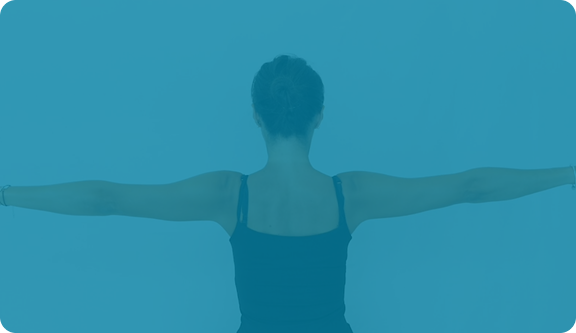
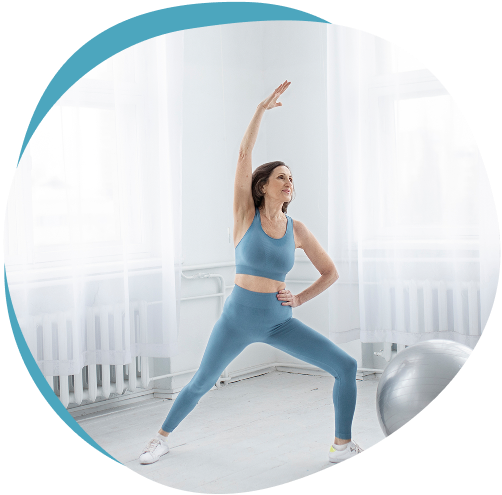
Starting position: The exercise is performed in a sitting position. The arms are stretched vertically, with a 180° shoulder flexion and the palms of the hands turned inwards.


Execution: Perform a maximum retroposition movement of the shoulders, trying to get more and more towards the end of the range of motion. Inhale as you bring your arms back, and exhale as you return to the starting position.


Pay attention: Respect the respiratory phases previously described during the exercise. Stop when you start to feel pain.

Exercise
Exercise For
active shoulder
joint recovery

2. Exercise useful for the recovery of shoulder rotation and abduction
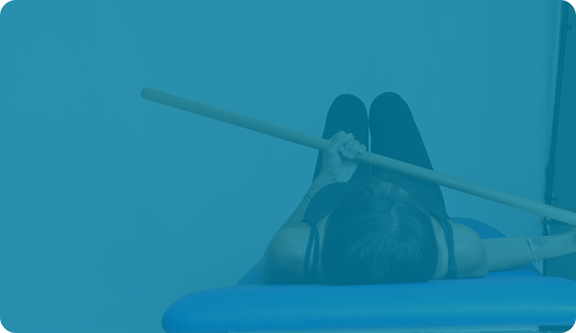
Starting position: The exercise is performed in a sitting position, with the spine erect. The arms are abducted to 90° and with intra-rotation of the shoulders.


Execution:Breathing in, perform an associated movement of external rotation and shoulder retroposition trying to get more and more towards the end of the range of motion. Exhaling, return with the arms to the internal rotation of the shoulders.


Pay attention: Respect the respiratory phases previously described during the exercise. No pain should be felt.

Exercise
Exercise useful for
the recovery of
shoulder rotation
and abduction

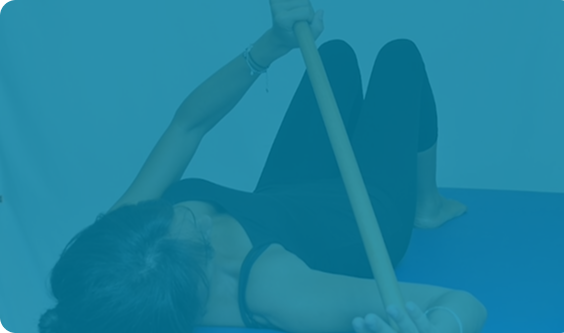
3. Extra-rotation exercise to increase joint range in active assisted mode
Starting position: Supine position, arms close to the trunk, elbows bent at about 90°, hips and knees bent, feet resting on the table, lower limbs together and parallel. Hands hold a rod.


Execution: Hold the rod with two hands, keep the elbow of the limb being exercised close to the trunk. Push the rod using the hand of the contralateral limb horizontally towards the palm of the hand of the limb being exercised. If possible, hold the position for a few seconds.


Pay attention: Avoid rotating the trunk and pelvis during the exercise. Do not move your elbows away from the trunk.

Exercise
Extra-rotation
exercise to
increase joint
range
in active
assisted mode

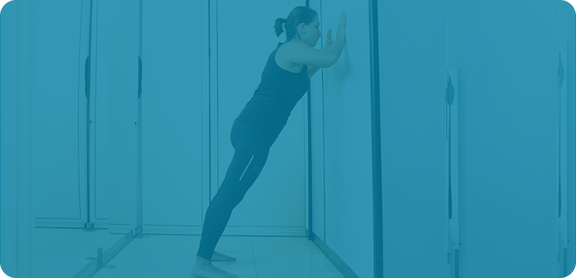
4. Exercise for the stabilizing muscles of the scapula in closed kinetic chain

Starting position:  Facing a wall with your hands placed on it; the feet are parallel to one another.


Execution: Make an arm push-up, bringing your face closer to the wall.


Pay attention: Avoid flexion of the trunk on the pelvis and flexion of the knees. Do not lift your heels off the ground.

Exercise
exercise for the
stabilizing muscles
of
the scapula in closed
kinetic chain

5. Exercise for the active joint range - “Wall climbing"

Starting position: Standing, with a well balanced load on the lower limbs, facing a wall. The arm performing the exercise is flexed anteriorly at 90° with the second finger of the hand touching the wall. The distance of the body from the wall is equal to the length of the limb laid forward.


Execution: Move the fingers of the limb to be trained along the wall (as if in “wall climbing”). This movement is accompanied by a progressive flexion of the arm, gradually passing from 90 ° to 180 ° with the elbow extended and gradually bringing the body closer to the wall.


Pay attention: Keep the spine aligned. Go slowly.

Exercise
exercise for the active joint range - “Wall climbing"

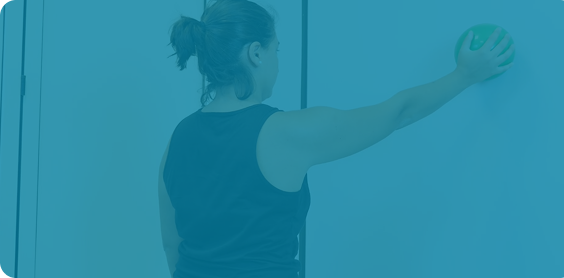
6. Exercise for active shoulder joint recovery (abduction)
Starting position: Standing upright, next to the wall with your fingers placed on it.


Execution:  Go upwards with your hand, gradually approaching the wall.


Pay attention: Avoid flexion of the elbow and rotation or inclination of the trunk.

Exercise
Exercise for
active shoulder
joint recovery
(abduction)

7. Extra-rotation exercise to increase joint range in active assisted mode with abducted arm

Starting position: Supine position, with hips and knees flexed and feet resting on the table, feet together and parallel to one another. Hands hold a rod. The upper limb that is being exercised rests on the medical bed and is abducted by about 90°.


Execution: Push the rod with the hand of the contralateral limb towards the palm of the hand of the limb being exercised, until the back of the hand is slowly brought into contact with the bed. If possible, hold the position for a few seconds.


Pay attention: Do not rotate the trunk and pelvis during the exercise.

Exercise
Extra-rotation
exercise to increase
joint range
in active
assisted mode with
abducted arm

8. Anterior deltoid strengthening exercise (shoulder flexion from supine position)
Starting position: Supine position with lower limbs held together, feet in parallel to one another. Upper limbs with elbows extended, placed along the hips. Hand of the limb in training holding a ball


Execution:  Keeping the upper limb with the elbow extended and parallel to the trunk, flex the arm bringing it up to 180°.


Pay attention: Keep the head and cervical spine close to the table.

Exercise
Anterior deltoid
strengthening
exercise (shoulder
flexion from supine
position)

9. Scapular clock

Starting position: Standing, with a well balanced load on the lower limbs, facing a vertical wall. The arm performing the exercise is brought into flexion at about 90°, maintaining the elbow extended, and with the hand holding the ball fixed against the wall. The contralateral arm with elbow extended is placed along the side.


Execution: By sliding the ball adherent to the wall, the hand is oriented in different positions thanks to rotational movements of the wrist in a clockwise and anti-clockwise direction.


Pay attention: Keep the spine aligned.

Exercise
Scapular
clock

10.Shoulder abductor muscles strengthening exercise with the use of dumbbells

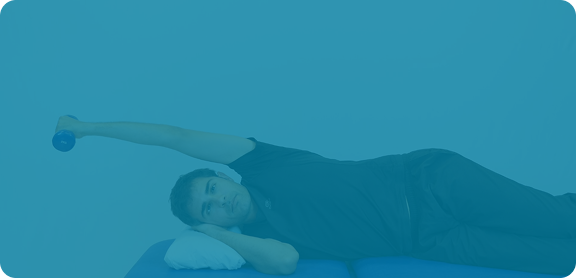
Starting position:  Stand on your side on a flat surface. The arm adhering to the medical bed is positioned with the elbow flexed and the hand under the head (a pillow can be used). The contralateral arm, which is to be trained, is extended along the side. With your hand, hold a light dumbbell.


Execution: Abduct the limb with the elbow extended up to 180° while holding a light dumbbell.


Pay attention: Do not use dumbbells of excessive weight.

Exercise
Shoulder abductor
muscles strengthening
exercise with the use of dumbbells

11.Shoulder extra-rotator muscles strengthening exercise

Starting position: Stand on your side on a flat surface. Place one arm close to the medical bed with the elbow flexed and hand under your head (a pillow can be used). Position the contralateral arm, which is to be trained, close to the side, then flex the elbow to 90°. With your hand, hold a light dumbbell.


Execution: Keep the elbow of the training limb well attached to the trunk, slowly rotate the forearm externally, lifting the weight up to a vertical position. Slowly return to the starting position.


Pay attention: Avoid twisting the trunk, which must keep contact with the ground.

Exercise
Shoulder extra-rotator
muscles strengthening
exercise

12. Exercise for strengthening the scapular stabilizing muscles with light dumbbells
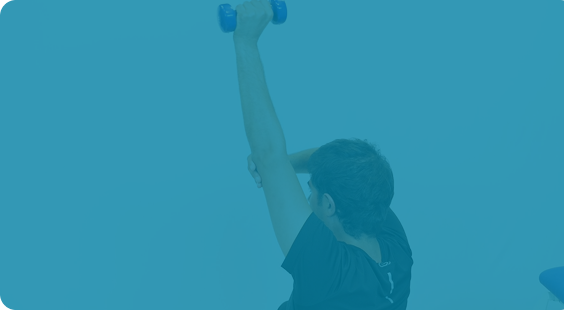
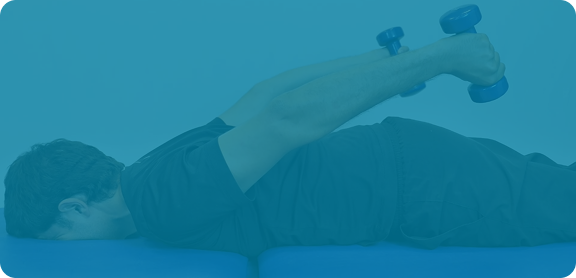
Starting position: Prone position on the medical bed. Lower limbs united, feet parallel to one another. Upper limbs placed along the hips. Hand of the limb in training holding a light dumbbell.


Execution: The upper limbs grip the dumbbells laterally, parallel to the floor, up to the position of maximum extension (beyond the head).


Pay attention: Do not use dumbbells of excessive weight.

Exercise
Exercise for strengthening
the scapular stabilizing
muscles with light
dumbbells

13. Brachial triceps strengthening exercise

Starting position: Standing with a well balanced load between the lower limbs. The upper limb in training is flexed at 180° and then brought at the level of the head, with the elbow flexed. The hand holds a dumbbell and is positioned behind the neck. The elbow is supported by the hand of the contralateral limb.


Execution: Gently extend the elbow, lifting the dumbbell, hold the position for a few seconds and slowly bring the limb back to the starting position. Repeat the exercise.


Pay attention: Avoid hyperextending the trunk, accentuating the lumbar lordosis.

Exercise
Brachial triceps
strengthening
exercise

14. Extra-rotator and shoulder abductor muscles strengthening exercises
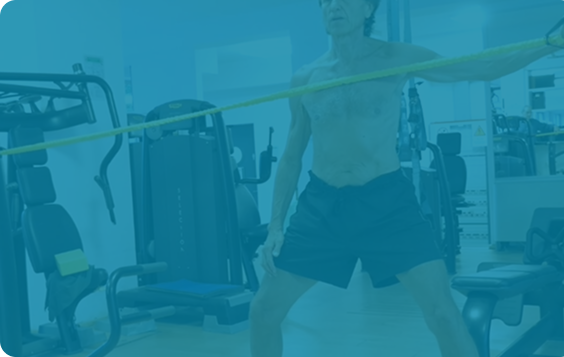
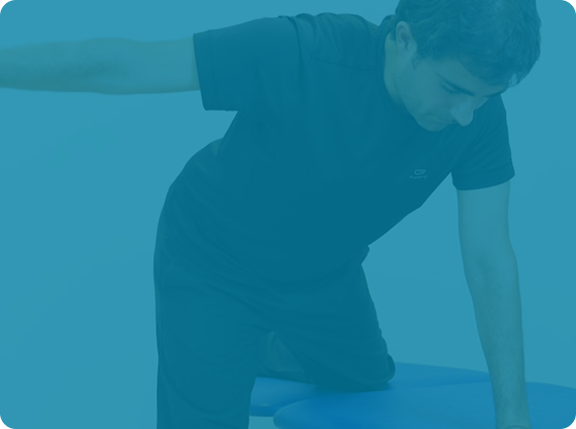
Starting position: Stand along the side of a medical bed and place the lower limb contralateral to the shoulder to be trained, on the bed. More precisely, the lower limb is positioned with the knee flexed at 90° with the front portion of the leg and knee in contact with the medical bed, aided by the hand palm support; with the upper limb with the elbow extended and the trunk slightly flexed. The upper limb being trained is kept outside the bed with the arm flexed at 90° and the elbow extended. With your hand, hold a light dumbbell.


Execution: From the starting position, perform an abduction movement (which goes just over 90°) with the upper limb holding the weight. Remain in this position for a few seconds and return to the initial position.


Pay attention: Avoid excessive extra-rotation. Do not use dumbbells weighting excessively.

Exercise
Extra-rotator and
shoulder abductor
muscles strengthening
exercises

15. Exercise useful for the extra-rotator and abductor muscles of the shoulder
Starting position: Upright position with your feet parallel to one another and shoulder-width apart, with your hands resting on a stable support (wall, chair or table) in front of your body.


Execution:Without moving the trunk and contracting your abdominal muscles, extend posteriorly your thigh with extended knee while inhaling. Hold the position for a few second and, exhaling, slowly return to the starting position. Carry out the same exercise with the contralateral limb.


Pay attention: Avoid hip extra rotation during the exercise. Avoid flexing the trunk forward to counterbalance hip extension. Avoid tendency to bend the knee during hip extension. Avoid excessive spine lordosis; a proper abdominal muscle contraction is needed. Do not flex the contralateral limb.

Exercise
Exercise useful for the
extra-rotator and
abductor muscles of
the shoulder

16. Exercises useful for recovering the shoulder range of motion
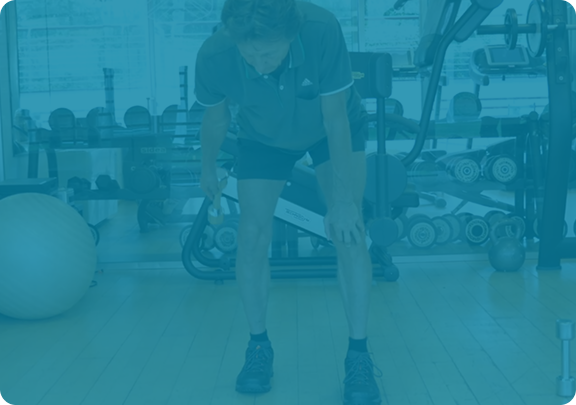
Starting position: In a semi-squat position with one foot slightly advanced with respect to the other and the trunk tilted forward, grab the dumbbell with one hand and keep the other hand resting on the knee of the advanced leg for support.


Execution: Keeping one hand resting on the knee, perform oscillating pendular movements with the affected arm, making an excursion in flexion, extension and abdu-adduction of the shoulder. This exercise is attributable to the Codman method.


Pay attention: Avoid compensation with lifting the shoulder by overloading of the trapezius muscles and extending the knees. Avoid misalignment of the trunk and head by flexing the head and performing dorsal hyper-kyphosis, causing consequent overload of the spine.

Exercise
Exercises useful for
recovering the shoulder
range of motion

17. Exercise useful for strengthening the abductor muscles of the shoulder, trapezius, paravertebral muscles
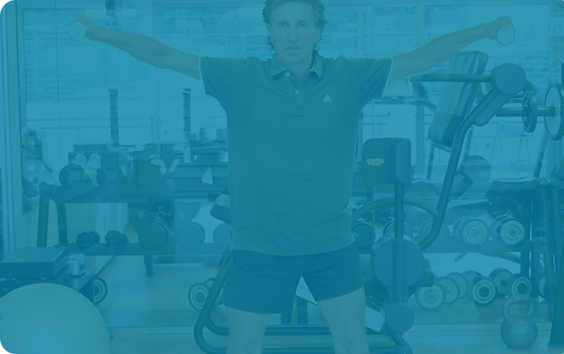
Starting position: In an upright position with the lower limbs slightly apart on the frontal plane, grasp the dumbbells with the arms extended and abducted to 90°.


Execution:Bring your arms straight to your sides and return to the starting position very slowly.


Pay attention: Do not flex or arch the trunk forward because of the risk of overloading the spine. Avoid lifting the shoulders by overloading of the trapezius muscles. Do not perform the movement asymmetrically.

Exercise
Exercise useful for
strengthening the
abductor muscles of
the shoulder, trapezius, paravertebral muscles

18. Exercise useful for strengthening the latissimus dorsi and elbow flexor muscles
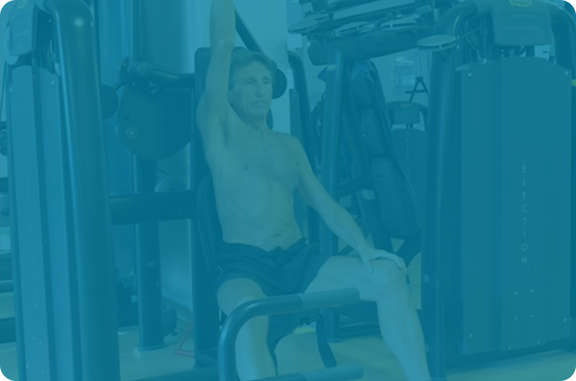
Starting position: Exercise performed sitting with your back to the Vertical Traction machine, back resting on the backrest, hip and knee flexed at 90°, lower limbs slightly apart. Grasp the internal grip of the traction lever, keeping the forearm in partial supination and the elbow extended. The contralateral upper limb is held with the palm of the hand resting on the ipsilateral knee. Keep the head in a neutral position


Execution: Pull the bar while exhaling, flexing the elbow and lowering the shoulder until the arm is completely adducted to the trunk. Slowly return to the starting position while inhaling


Pay attention: Avoid bending of the trunk if using loads inadequate to your abilities and degree of training

Exercise
Exercise useful for
strengthening the
latissimus dorsi and elbow flexor muscles

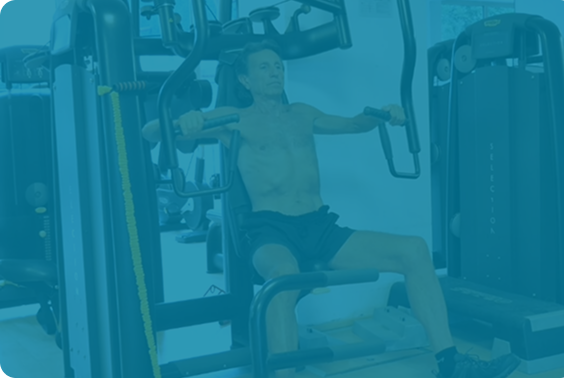
19. Exercise useful for the pectoral muscles, brachial triceps and anterior deltoid muscles
Starting position: Sitting on the seat of the Chest Press machine with the trunk well supported on the backrest, hold both dumbbells, keeping the shoulder at 90° of abduction and the elbow flexed.


Execution: Extend both arms by pushing them forward until they are parallel to each other. Then slowly bring the arms back to the starting position.


Pay attention: Avoid moving the trunk forward, losing the support on the backrest. Avoid excessive lifting of the elbows and consequent incorrect positioning of the scapulae. Avoid excessive load.

Exercise
Exercise useful for the
pectoral muscles, brachial
triceps and anterior deltoid
muscles

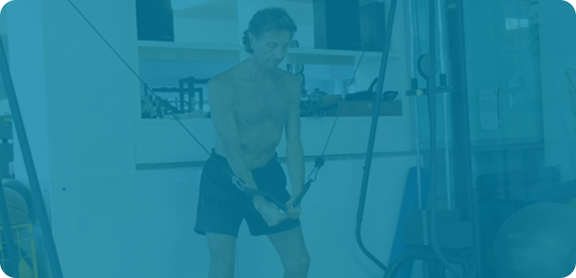
20. Exercise useful for latissimus dorsi, pectoral and anterior deltoid muscles
Starting position: Standing position, with shoulders abducted.


Execution: Grasp the elastic cables by pushing them down, bringing them in front of the trunk, with an adduction and intra-rotation movement of the shoulder, keeping the elbows slightly flexed and wrists aligned; perform exercise maintaining the position described.


Pay attention: Avoid excessive shoulder abduction at the starting position. Avoid incorrect position of the spine.

Exercise
Exercise useful for
latissimus dorsi,
pectoral and anterior
deltoid muscles

Discover More Exercises

HIP
EXERCISES

TENDINOPATHIES EXERCISES

KNEE
EXERCISES

Videos, contents, images, texts, extracts from the book “ESERCIZIO TERAPEUTICO E TERAPIE INTEGRATE NELLE PATOLOGIE MUSCOLO – SCHELETRICHE” edited by Valter Santilli, are protected by copyright and intellectual property rights. It will therefore be forbidden to copy, appropriate, redistribute, reproduce any content present on this site.

You are about to leave this website

External content may be subject to different local regulations, product availability may vary by market.